Lately, I have been watching to see how the US administration's xenophobic dogwhistle about “civilizational erasure” in Europe might start to inform policy proposals across the continent. In some ways, it already has: the violence of ICE raids (and its appeal to politicians like Britain’s Nigel Farage) is motivated by a fear that black and brown people will come to outnumber whites. When the womb is a site of immigration policy, who gets to mother becomes a matter of national security.
Visuals by Nathalie Basoski / Commissioned by Lara Antal
02.It’s been a year since Trump’s aid cuts sent shock waves around the world. But in one maternity hospital in Freetown it’s the loss of UK funding that threatens to unravel years of steady progress to address maternal mortality
05.The author of Unwell Women and A Woman’s Work questions our obsession with wombs and considers what resistance by mothers and midwives has looked like through the ages
Priscilla Heuveline while pregnant with her son in Houlme, France. July, 2025.
10.France offers state-funded fertility treatment but for lesbian couples and single women, sperm and egg donor shortages and discrimination mean access feels like an empty promise
12.Juggling work and children leaves mothers with no time and mental health challenges. But the solution isn’t a return to the gender roles of the 60s. It’s building systems of collective care that ease the burden on all parents, writes Zara Rahman
Photographs of newborn babies in the home where surrogate Nui* was housed, September 2025.
13.A booming surrogacy industry has made fortunes and broken promises. As scandals brew and a court case begins in Georgia, three women who carried children for strangers share their stories – from emergency twin C-sections to failed implantations
14.The author of Unwell Women and A Woman’s Work questions our obsession with wombs and considers what resistance by mothers and midwives has looked like through the ages
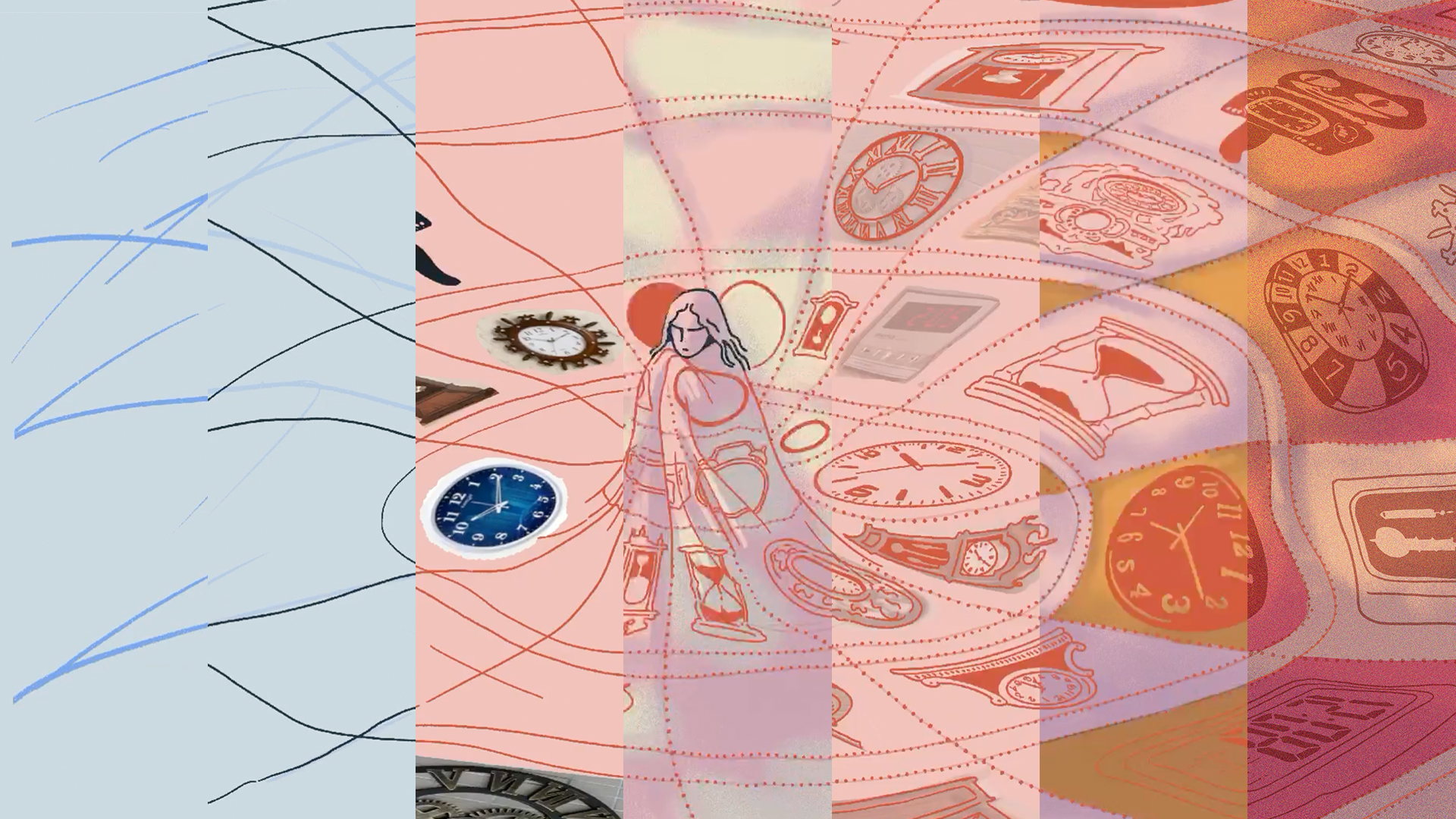
For our Motherhood edition, which explores both the personal and political sides of the experience, visuals editor Lara Antal knew that they didn't want to only picture mothers and babies. But how did she land on blankets as the thing that tied it all together? Read on to discover more on their artistic process.
How did you approach developing the visual identity for this edition?
Lara Antal: The concept of motherhood is as expansive as the world itself, and so the visual theme had to be just as versatile; ubiquitous, widely cultural, and deeply personal, all at the same time. The answer was theblanket. Designed through quilted, patchwork, dyed, and countless other techniques, they are a visually rich and diverse object. The act of blanket-making, and the blankets themselves, have often been passed down through generations of women. These creations are affirmations of a way of life; cultural traditions, made visible through unique patterns and processes.
Using them in ‘high-design’ is a feminist reclamation of a world that dismissed these art forms as merely ‘women’s craft’ (see Judy Chicago’s The Dinner Party). But at their most essential level, blankets are symbolic of caretaking. Say the word, and it brings to mind images of mothers swaddling babies. Blankets can protect, shelter, and provide warmth. But they can also smother or wrap too tightly. Blankets can, over time, be lovingly used and worn. Or, under harsher and unkind conditions, be torn and unraveled. A blanket holds within it the history of countless communities and people.
The work in progress for Fuller's piece on motherhood and time. Image credit: Lara Antal
As you worked, what did you learn, related to the theme of the edition, that most surprised you?
I was delighted to find that the visual theme was flexible enough to incorporate multiple artists' approaches. For my contributions, I was able to work in different styles, using collage for the key image and traditional illustration for an op ed piece.
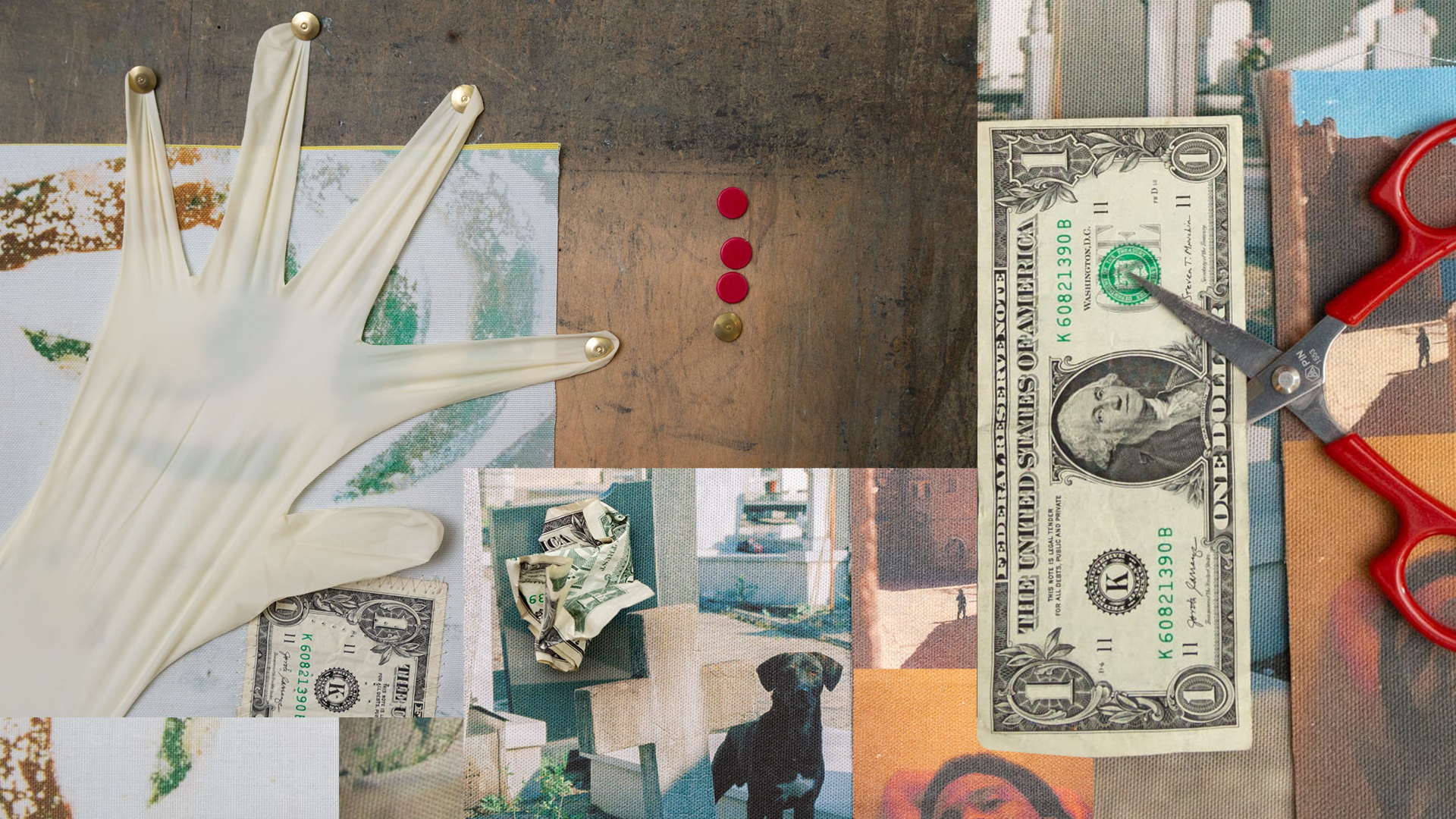
When I reached out to our guest artist, Nathalie Basoski, I had an idea of how she might translate the theme. Again, I was happily surprised by the result. To use a simile: a successful art director-artist relationship is like sourcing well-known ingredients for a chef, and they find a way to create a dish full of novel, unexpected flavors. Basoski’s collage blurred the boundaries of 2D and 3D. Crafted through a process that stitched fabrics, photos, string, and even currency together, each iteration and edit brought something new to the surface. Her final photographic piece blended layers of meaning seamlessly into one image.
The work in progress for Fuller's piece on aid cuts in Sierra Leone. Image credit: Nathalie Basoski, commissioned by Lara Antal
Were there any concepts you loved but had to leave on the cutting room floor?
The great thing about the theme is that there were infinite ways to express it. So, rather than feel like things were cut, I lamented not being able to explore every idea. I wanted to incorporate blanket schematics and design patterns more, or try to visualize data in woven styles. But there is only so much time in the day!
Lead visuals by Lara Antal. Edited by Charlie Brinkhurst-Cuff and Eliza Anyangwe
Lead visuals by Lara Antal. Edited by Charlie Brinkhurst-Cuff and Eliza Anyangwe
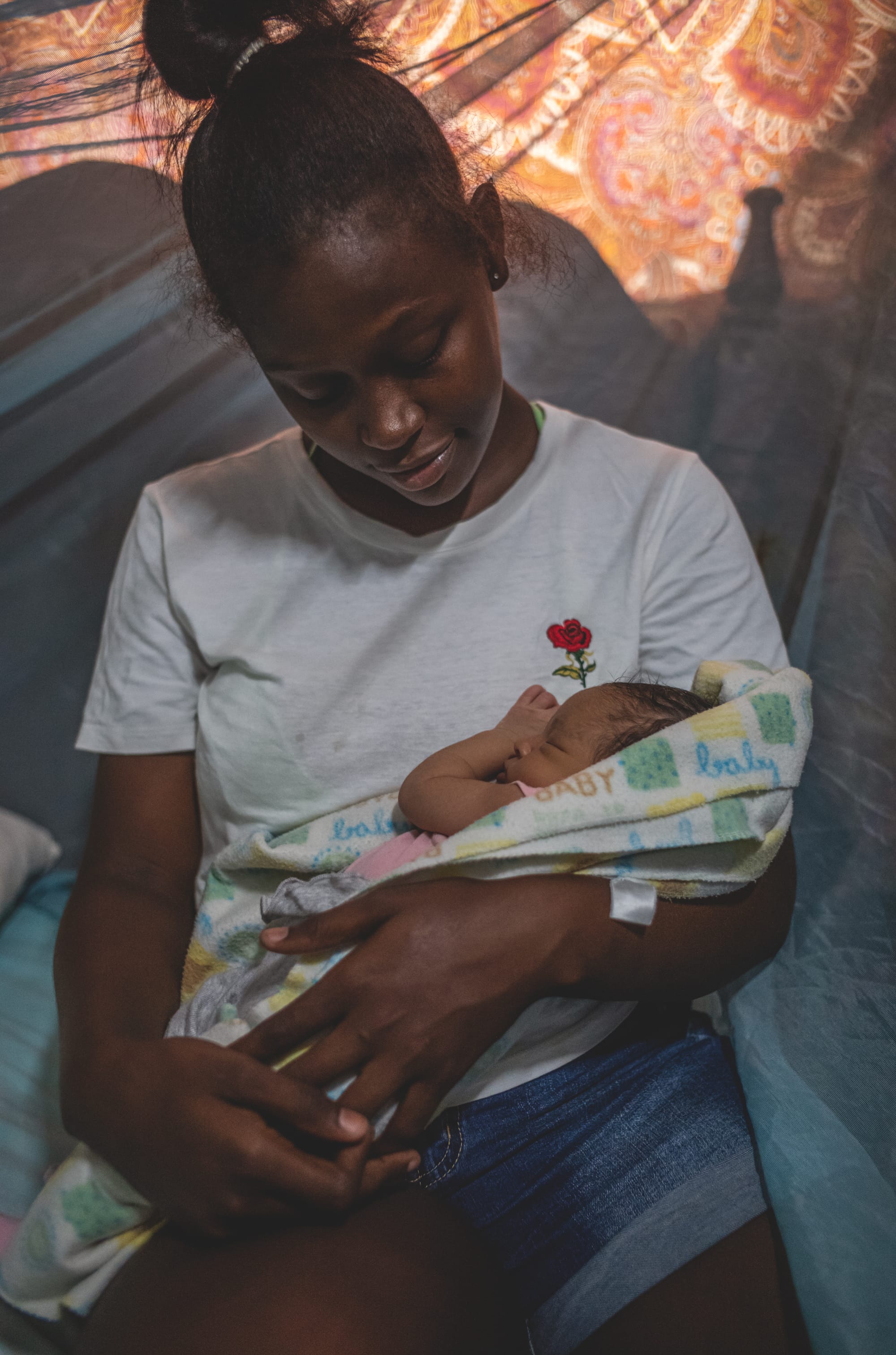
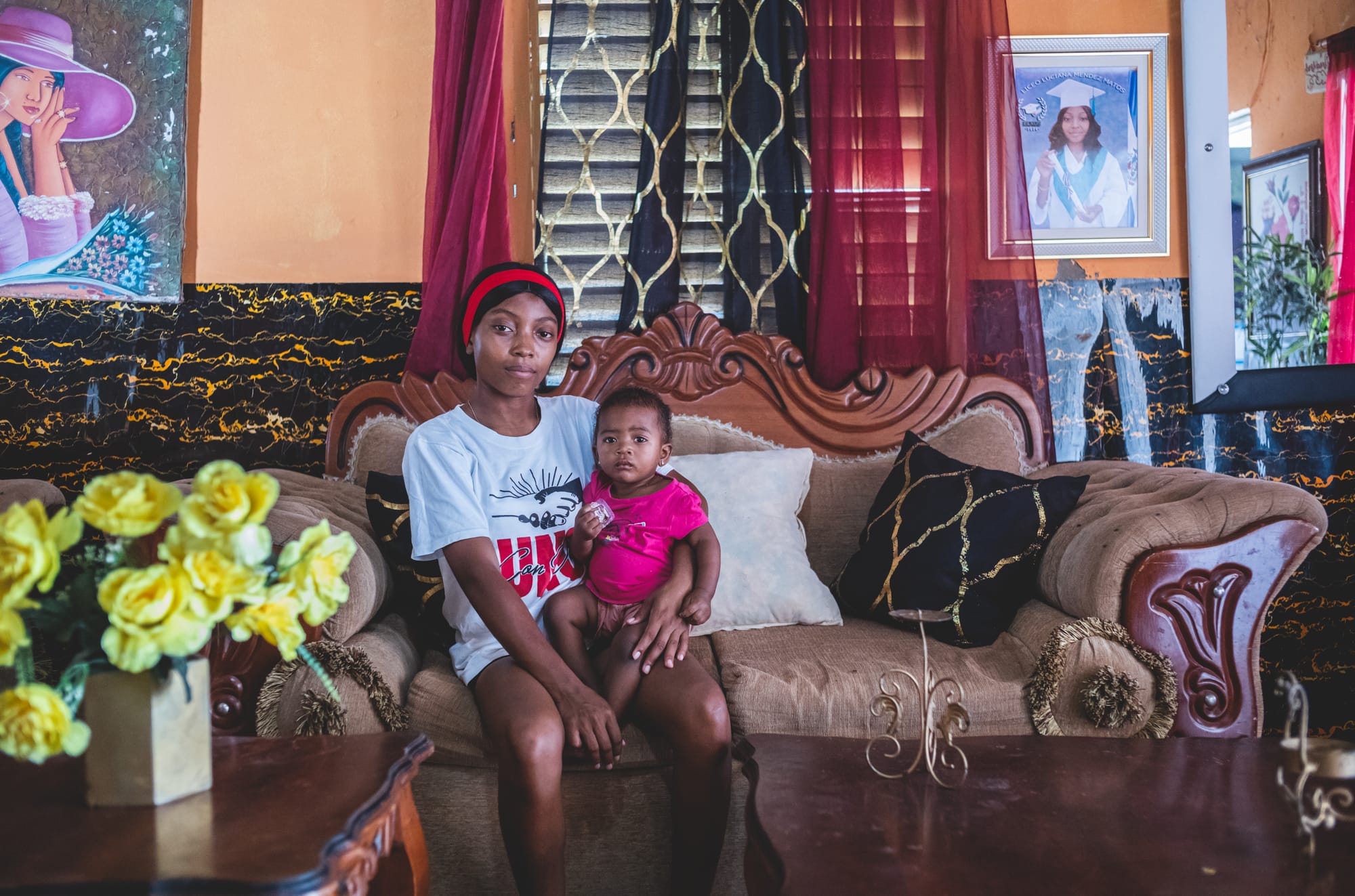
Two days after a cesarean section in Santo Domingo, the capital of the Dominican Republic, Clarissa (pictured above), 16, was detained by immigration agents and transferred to a detention center with her newborn. Born in the country but never registered due to her mother’s lack of documentation, she is stateless. Authorities presumed she was Haitian. Clarissa spent 48 hours in custody without food, water, or medical care, her surgical wounds still unhealed.
Haitian adolescents in the Dominican Republic, like Clarissa, accounted for nearly one in four recorded teenage pregnancies in 2025, despite representing a small share of the population. The teenager’s detention, in April 2025, occurred amid tightening deportation policies and legal restrictions. Since late 2024, deportations of Haitian migrants have intensified, including the removal of undocumented women and girls immediately after receiving medical care or giving birth, with immigration agents stationed outside maternity hospitals.
In August 2025, a new penal code reaffirmed the total criminalization of abortion, without exceptions for rape, incest, or life-threatening pregnancies; eliminating any legal recourse for girls who become pregnant and further narrowing the options available to those already avoiding public hospitals for fear of detention.
These measures fall hardest on those with the fewest resources. Poverty restricts young Haitians’ access to contraception and healthcare. They have limited academic and reproductive education and are vulnerable to early cohabiting relationships with men much older than them. Wealthier families seek discreet antenatal care for their pregnant daughters; undocumented Haitian girls may avoid hospitals altogether. Their vulnerability is shaped by class, race and legal status – but Haitian girls are not alone.
I travelled to the Dominican Republic from Spain in May 2025 because the island has one of the highest adolescent pregnancy rates across Latin America and the Caribbean. According to the UN agency, Unicef, in 2024 one in five girls, aged 15 to 19, had begun having children. Between January and September 2025, almost 12,000 adolescent pregnancies were recorded, including 609 among girls under 15. The age of consent in the Dominican Republic is 18.
Across the cities and towns of Barahona, Dajabón, Las Terrenas, and Santo Domingo, I documented pregnancies resulting from sexual abuse and relationships shaped by economic constraint. Trust was built gradually, through repeated visits, long conversations with the girls and their mothers, and a self-representation photography workshop I led in Barahona in collaboration with a local women’s organization. I also witnessed mothers supporting daughters to finish school, neighbors sharing childcare, and initiatives discreetly distributing contraceptives. Where institutions fail, community becomes infrastructure.
But it was the stories of the Haitian girls that really struck me. Several of them described feeling suspended between two countries. They felt caught between childhood and forced adulthood, expected to carry the weight of motherhood before they had the chance to imagine their own futures. They spoke of pregnancies shaped by silence, stigma, and the absence of the care and information that might have allowed them to decide differently.
In February, national media reported a 66.3% decline in adolescent pregnancies over the previous nine years. It’s an impressive figure. Yet the basic conditions known to reduce teenage pregnancy – sexual education, accessible contraception and safe abortion – remain largely absent. And girls and women who are stateless, undocumented, or perceived to be Haitian, remain at great risk.
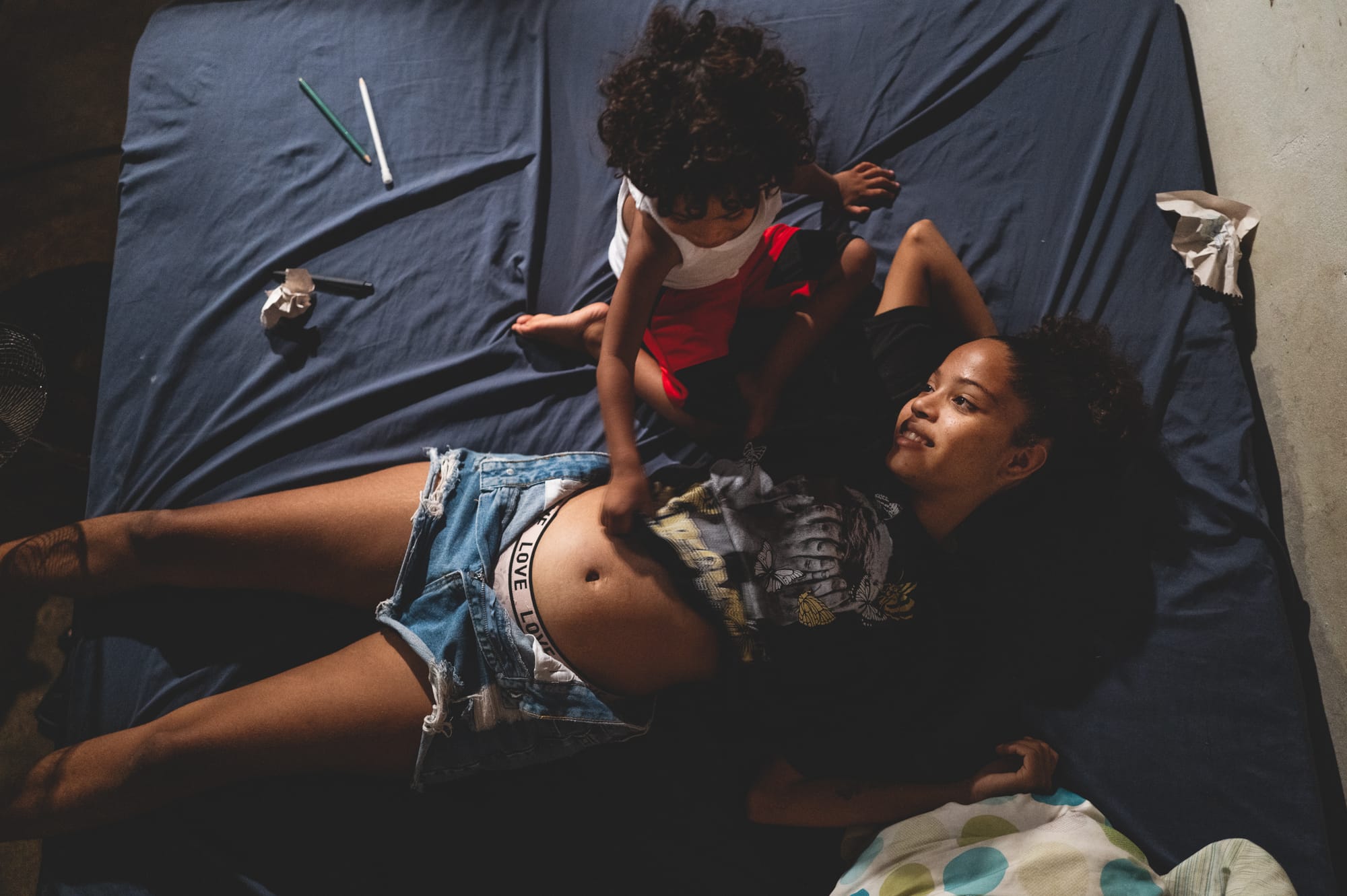
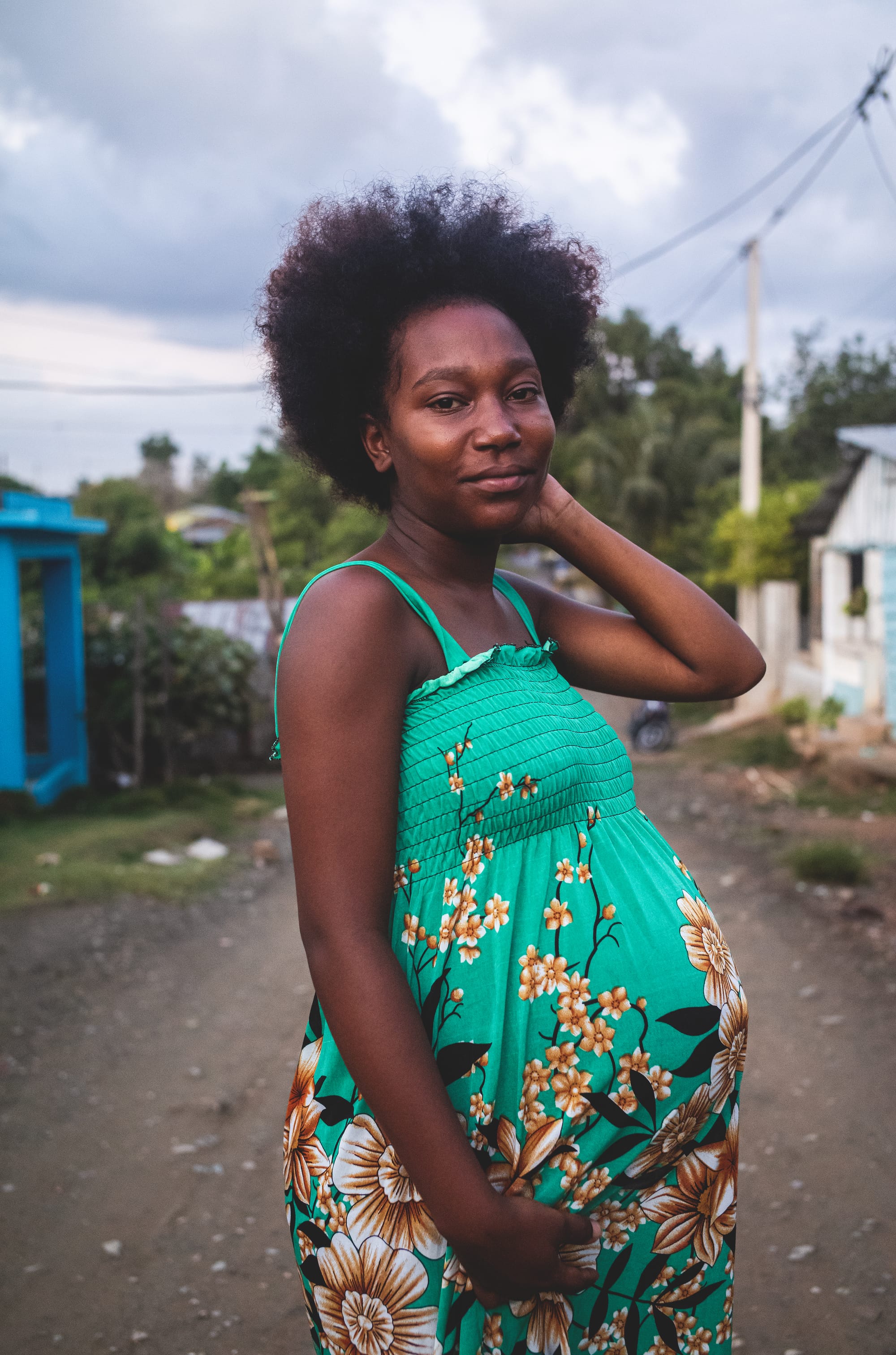
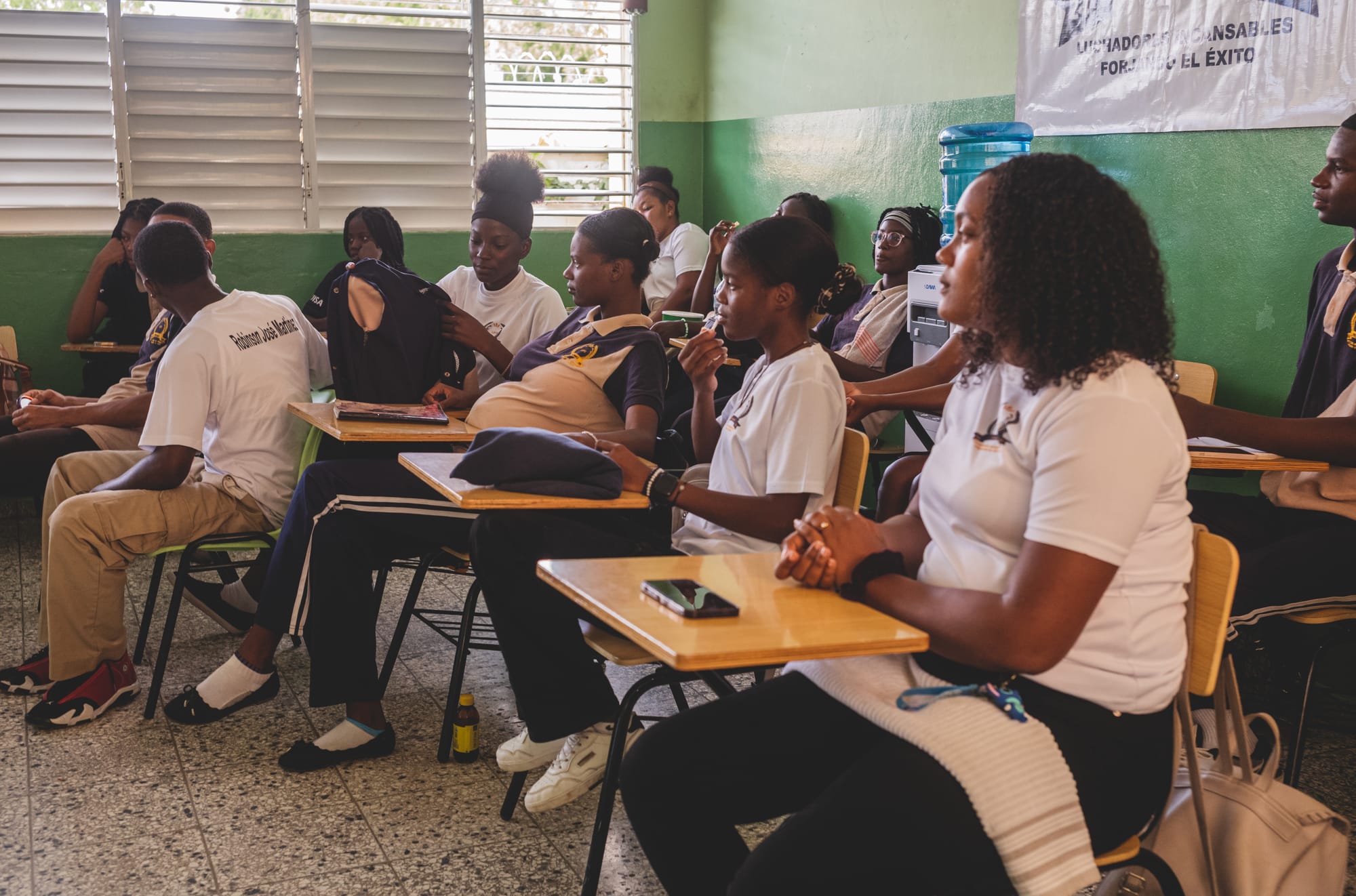
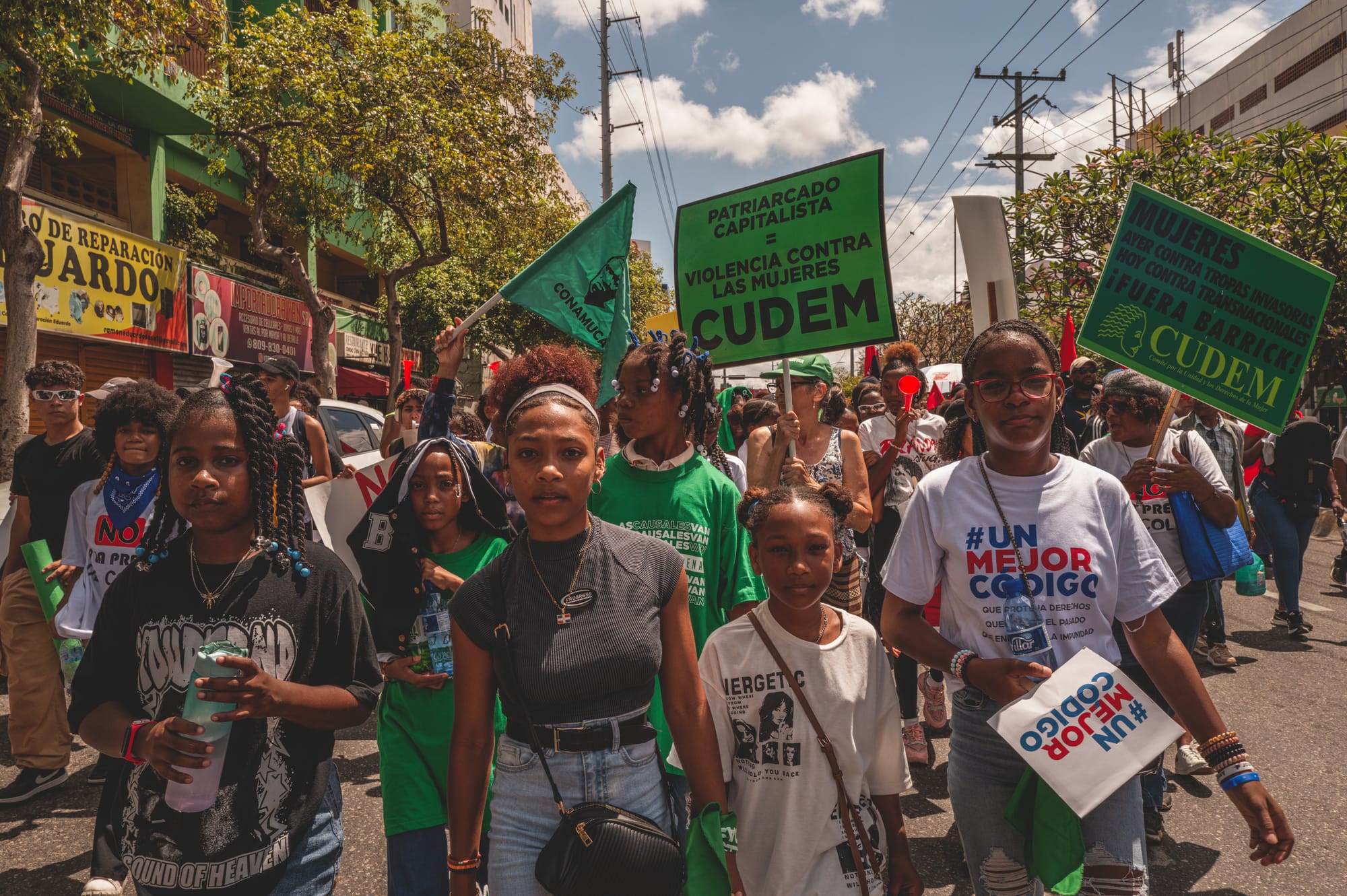
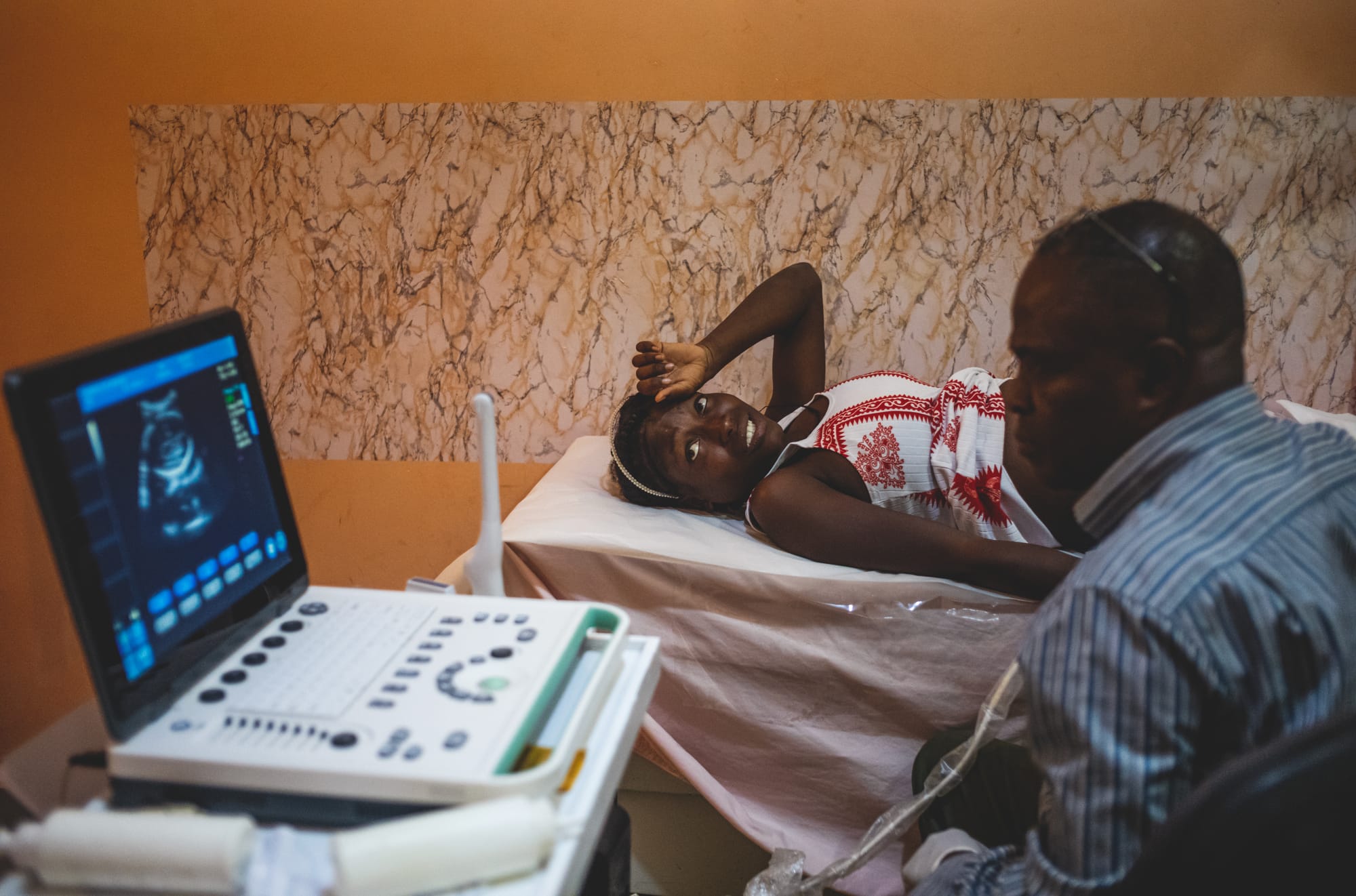
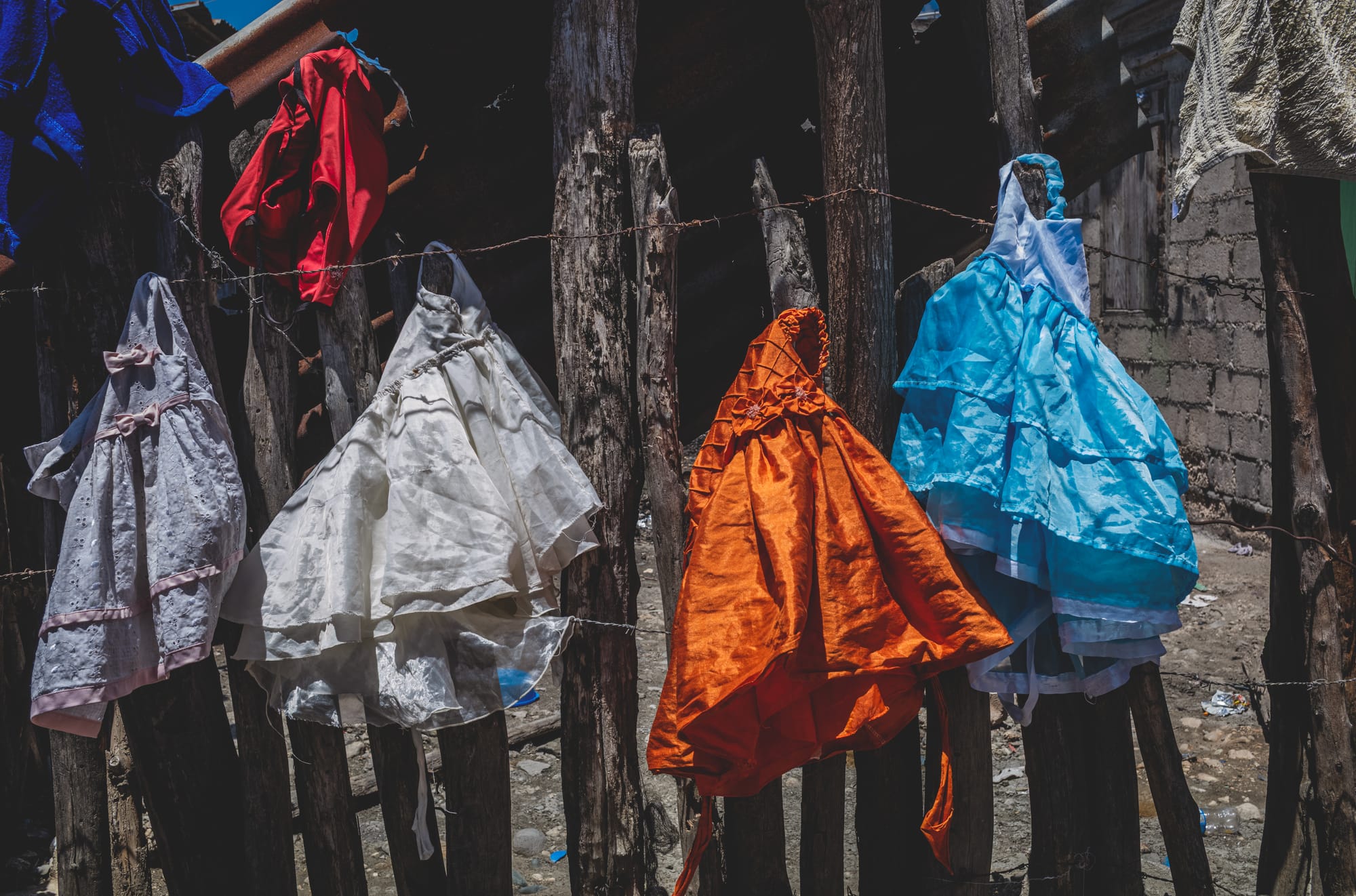
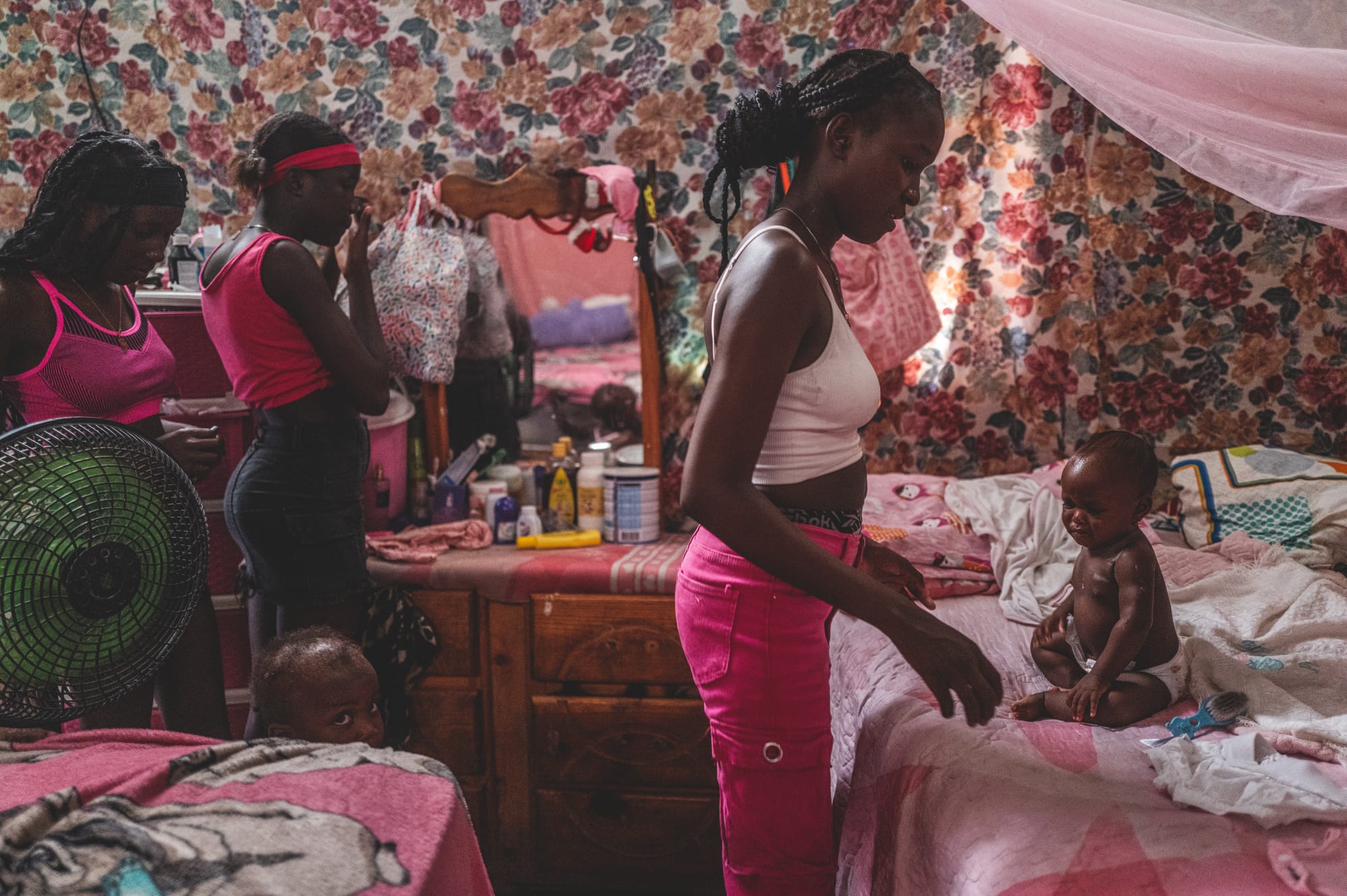
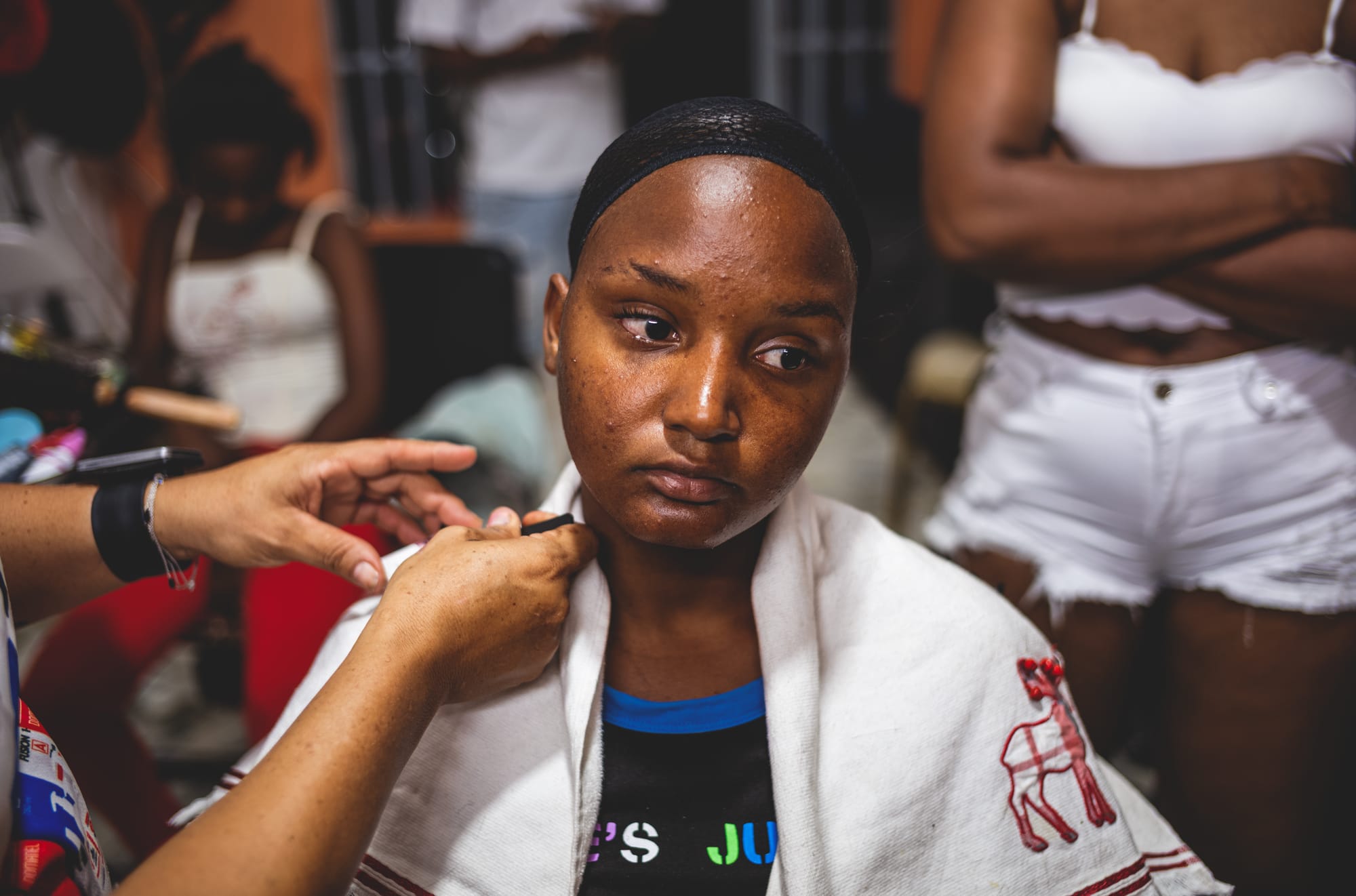
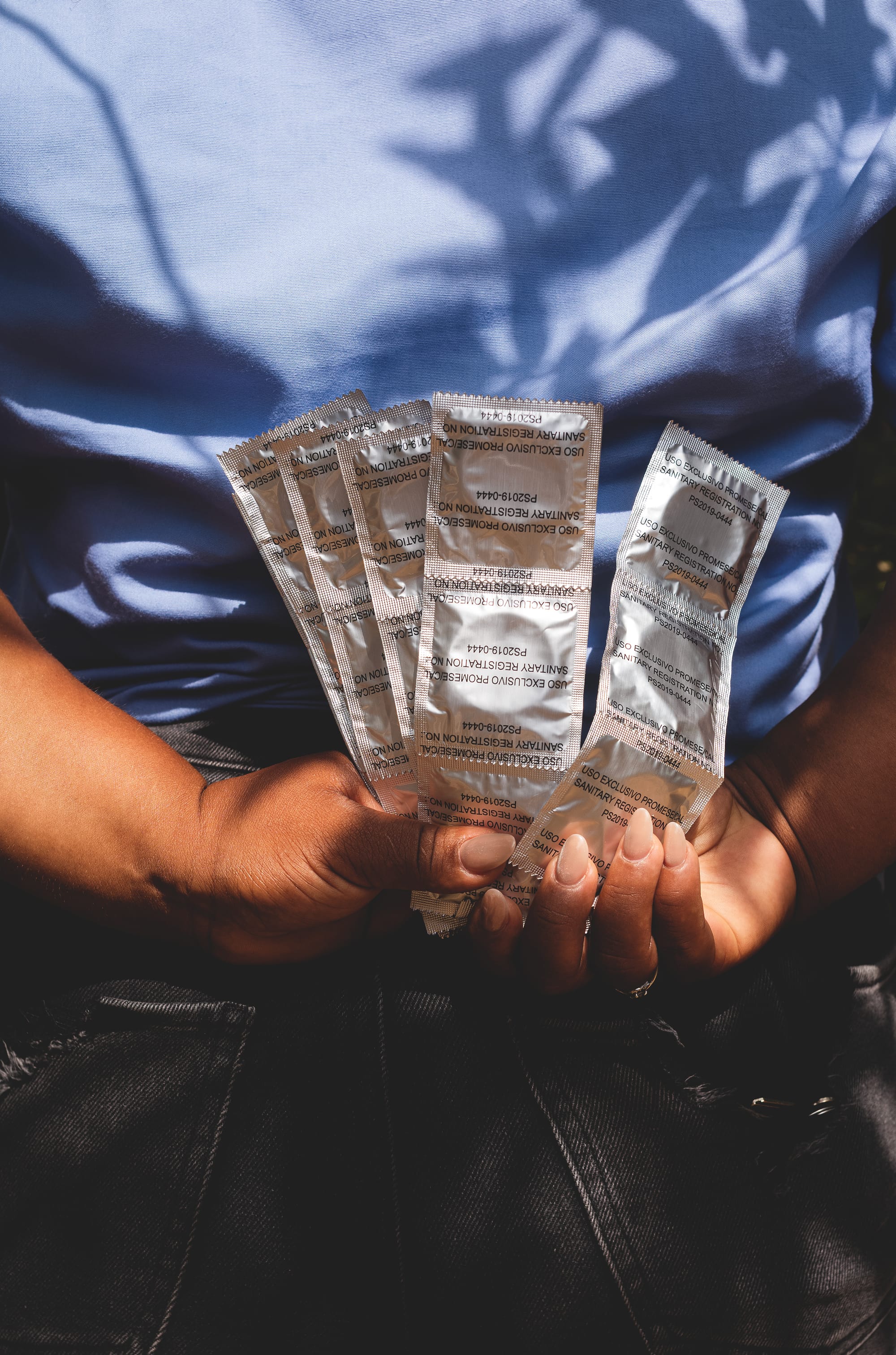
Clarissa, 16, photographed at home with her baby in their bedroom in Santo Domingo.Emely, 17, rests on the bed watching her 3-year-old son in their home in Las Terrenas. A heart tattoo bearing his name marks her arm. Now pregnant with her second child from the same relationship with an older partner, Emely lives with her aunt and grandmother. She says she was expelled from school after her first pregnancy and never returned. Classmates told her her life was over. She spends most of her time at home, partly due to a high-risk pregnancy and partly because of stigma.Alessandra, 17, stands in the doorway of her home in Dajabón. She gave birth to a boy the following day. The baby’s father works near Santiago, a three hour drive away, and was not present. Alessandra lives with her mother, her primary support. Dajabón is a border province with one of the country’s highest rates of adolescent pregnancy.Yulissa, 17, studies with classmates during her final days at the public school in Barahona. Nine months pregnant, she is preparing for the national university entrance exam. Despite the physical strain of late pregnancy, she continues attending classes daily, determined to graduate.Girls and women from the National Confederation of Rural Women (Conamuca) march during a national demonstration in Santo Domingo against the Dominican government’s migration protocol, which has resulted in the detention and deportation of Haitian women immediately after discharge from maternity hospitals. Conamuca is a grassroots organization advocating for the rights of women and girls in rural and marginalized communities.Mylove, 15, an undocumented Haitian girl who does not speak Spanish, attends her first prenatal appointment at a private clinic in Barahona. An ultrasound reveals she is five months pregnant and expecting a girl. She has avoided the public health system out of fear of deportation. She is the eldest of several siblings and migrated from Haiti two years ago with her family, fleeing gang violence.Girls’ dresses hang in the sun to dry after being washed in Batey 5, Barahona province. Bateyes are rural settlements originally built around sugar mills and historically inhabited by Haitian and Dominican laborers. Many settlements continue to face limited infrastructure, restricted access to healthcare, and barriers to education.Yaqueisi, 17, changes her baby’s clothes inside their home in Batey 5. Three of her sisters are nearby. Early motherhood spans generations in her family: her father was 17 and her mother 14 when they had their first child. On the day this photograph was taken, the batey had been without electricity for a week – an interruption residents describe as common.Carolina, 17, gets eyelash extensions at a beauty salon in Dajabón on Mother’s Day. At just 12, she entered an “early union” with her first boyfriend, who was 18 years old. Child marriage remains common in the region and is associated with school dropouts, early motherhood and limited access to opportunities. Carolina gave birth at 15 and stayed in the relationship for seven years. Today, she lives with her parents and her daughter.The owner of a casa clave displays condoms inside her home in Dajabón. A casa clave – literally “key house” – is a discreet, community-run space where adolescents can obtain contraceptives, particularly condoms, without drawing attention or having to ask family members. This woman, who requested anonymity to protect the confidentiality and safety of the adolescents who visit, became a mother as a teenager and says she does not want other girls to have the same experience. According to her, many of the adolescents who come seeking contraceptives are Haitian, living in precarious conditions and hesitant to approach formal health services.Leidy, 17, poses for a portrait with her two-year-old daughter at their home in Batey Cuchilla, Barahona, on 15 May, 2025. She says her greatest accomplishment was graduating from high school. She now lives with her parents and, although she is not currently studying or working, helps with household tasks. In rural bateyes like this, early motherhood often disrupts girls’ education and narrows their future opportunities.
Photography by Ana María Arevalo Gosen. Edited by Charlie Brinkhurst-Cuff and Eliza Anyangwe.
Photography by Ana María Arevalo Gosen. Edited by Charlie Brinkhurst-Cuff and Eliza Anyangwe.